How AI Search Engines Decide Which Dealer Sites to Cite
AI answers cite sources, and citation is the new ranking. Here is what cited pages have in common - backed by real Bing AI citation growth from a live client.
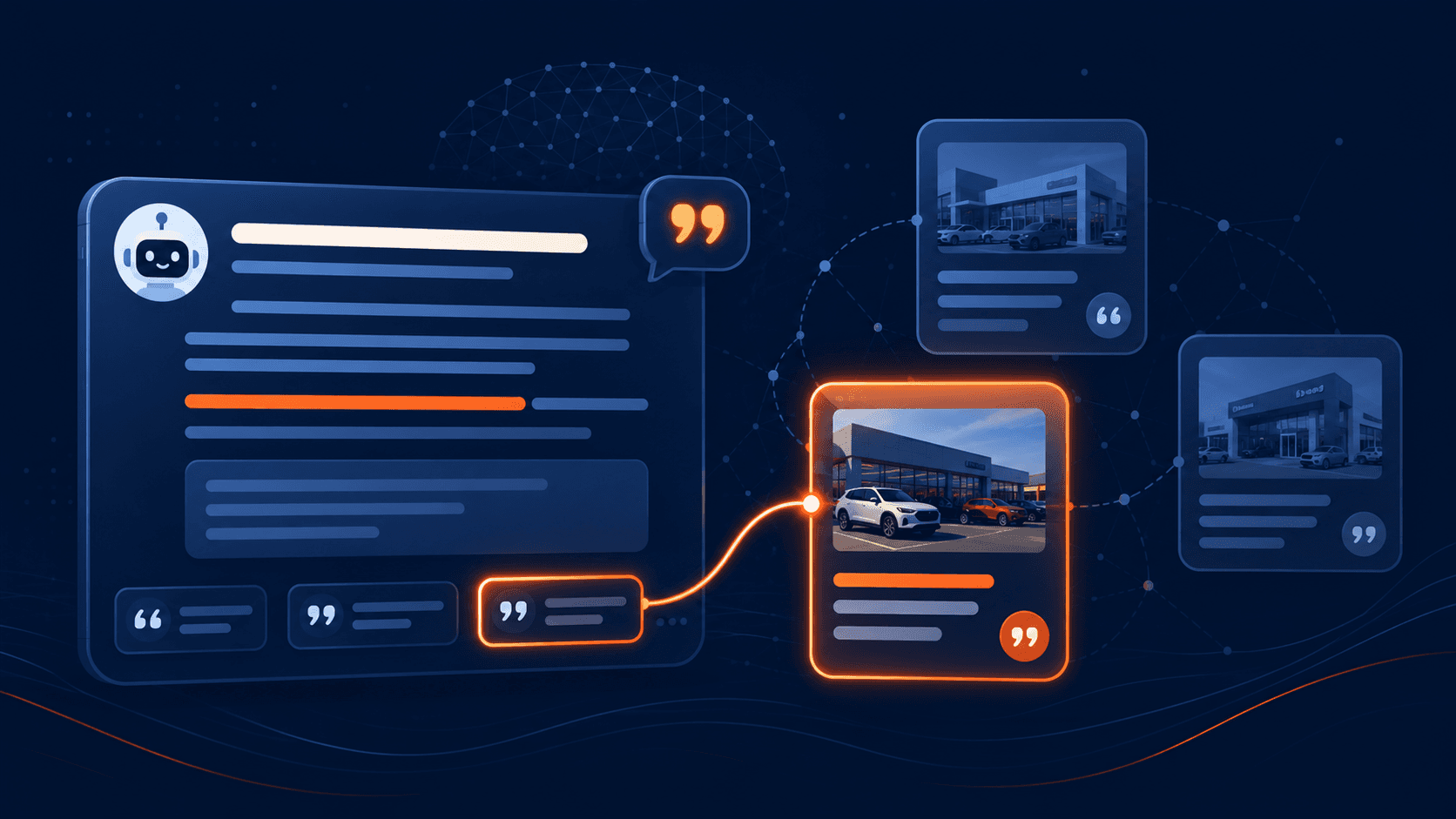
When an AI assistant answers a car-buying question, it composes the answer from sources - and cites some of them. Those citations are the new visibility: the buyer may never see a traditional results page, but they see which sites the answer trusted. The practical question for a dealership is not "how do I trick the AI" - it is "what do cited pages have in common, and does my site look like that?"
This is measurable now, not theoretical
Bing Webmaster Tools reports AI citations directly: how often your pages are cited in Copilot-related experiences, and which pages earn it. On AutoLeadPro.com - a real client, documented in the case study - AI citations grew from 2K to 5.4K in a three-month comparison window, a +170% increase, with average cited pages rising from 5 to 6. Real platform numbers, screenshots public. That growth did not come from AI tricks; it came from the same clarity work that improved normal rankings.
What cited pages tend to share
- A clear entity: the page states plainly what the business is, who it serves, and where - no decoding required.
- Direct answers: questions answered in the first sentence, then expanded - not buried under 400 words of preamble.
- Clean structure: real headings that describe sections, lists where lists belong, one topic per page.
- Consistency: the page agrees with the rest of the site and with the business's public profiles.
- Actual substance: something specific worth citing - a process, a number, an answer - not generic filler.
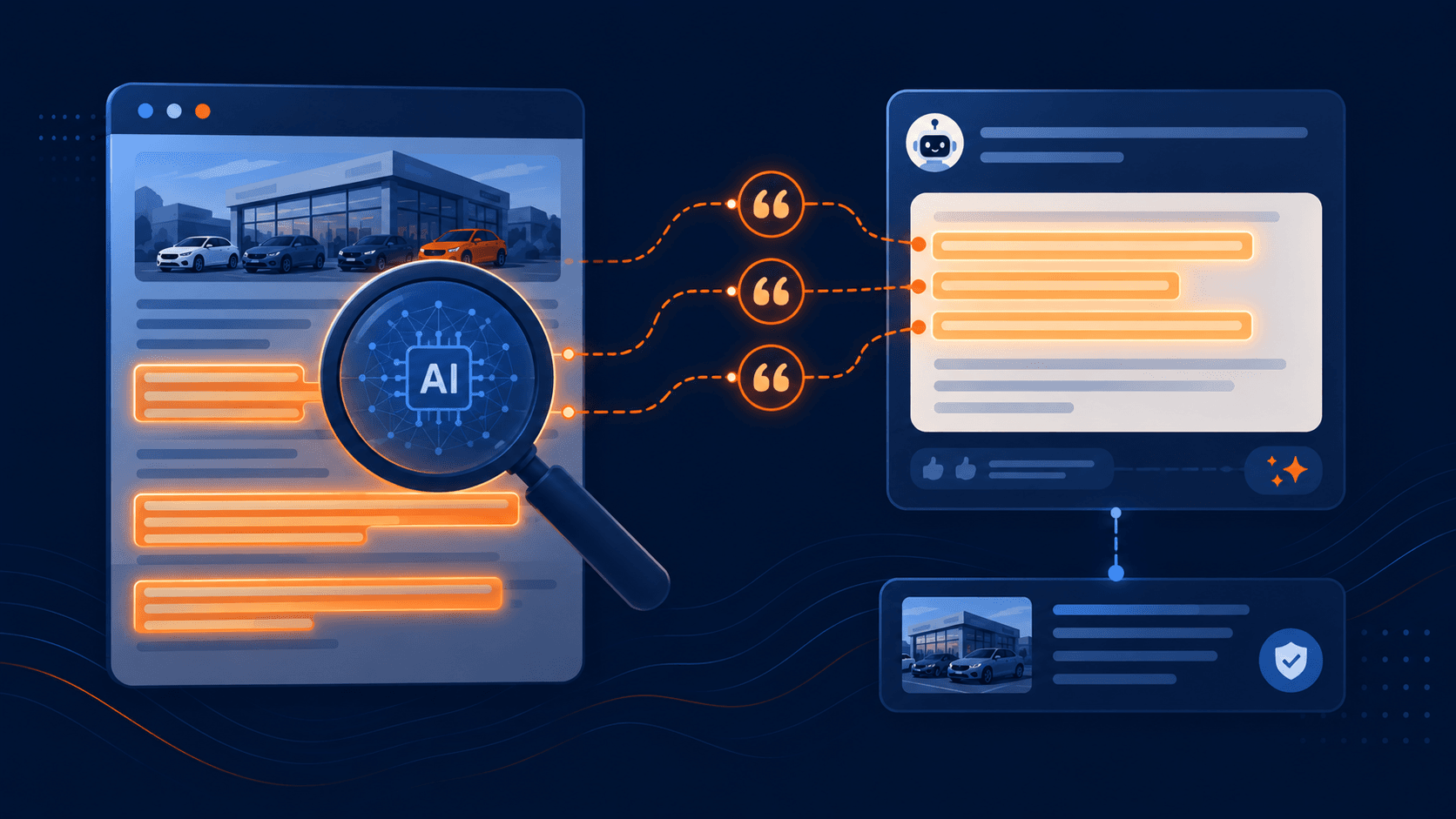
Why clarity beats cleverness
Answer engines summarize. A page that is easy to summarize accurately is a low-risk source; a vague page is a liability to the answer. That is why the same revisions that help Google rankings - explicit headings, direct answers to buyer questions, honest service descriptions - also raise citation odds. There is no separate "AI SEO" to buy. The deeper background on this is in AI visibility SEO for dealerships.
How to check your own citation footprint
Open Bing Webmaster Tools, find the AI performance reports, and look at two things: total citations trend and which pages get cited. Then read those pages and ask why - usually they are the clearest, most direct pages on the site. That tells you exactly what your weaker pages are missing. Manual spot checks help too: ask an AI assistant the questions your buyers ask, and see who gets cited in your market.
AI visibility is measured, not mystical. If you want to know whether your site is citable - and what is blocking it - request an AI visibility review and I will show you in the platform data.
FAQ
Bing Webmaster Tools reports AI citations directly - total citations, cited pages, and the grounding queries that triggered them. Manual spot checks help too: ask Copilot, Google AI Mode, and ChatGPT the questions your buyers ask and note who gets cited.
Cited pages share a pattern: a clearly stated entity (who, what, where), direct answers in the first sentence, clean heading structure, consistency with the rest of the site, and specific substance worth extracting - not generic filler.
Yes. On AutoLeadPro.com, Bing Webmaster Tools recorded AI citations growing from 2K to 5.4K (+170%) in a three-month comparison window, with average cited pages rising from 5 to 6 - real platform data, documented with screenshots in the public case study.
No. The same clarity work that improves normal rankings - explicit headings, direct answers, honest service descriptions, clean structure - is what raises citation odds. AI visibility is a result of content quality, not a separate discipline.
Sources
- AutoLeadPro case study - Jerome SEO Works - Live client proof: Bing Webmaster AI citation growth from 2K to 5.4K (+170%) in a 3-month comparison, with platform screenshots.