SMS Follow-Up for Car Dealerships: Speed Wins, Systems Scale
SMS gets read in minutes, which makes it the fastest follow-up channel a dealership has - and the fastest way to create chaos if nobody organizes the replies.
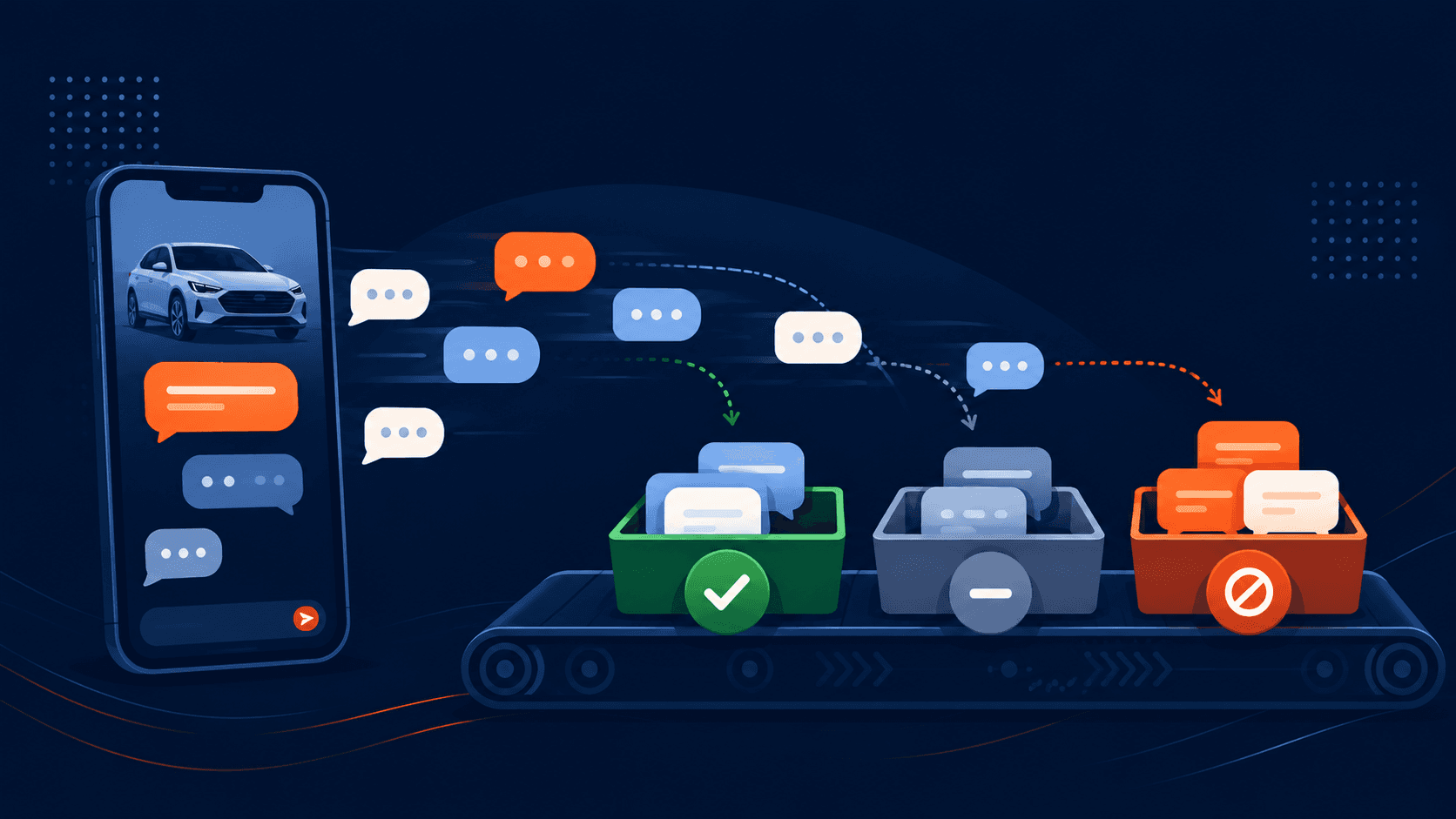
Most emails to car buyers sit unread until the buyer has already bought somewhere else. Texts get read in minutes. That is the whole argument for SMS follow-up - and also the trap: when replies come back in volume, someone has to read, sort, and route every one of them, or the speed advantage dies in an unattended inbox.
I say this from direct experience: I built an SMS reply-handling pipeline for an automotive lead provider working with multiple dealerships, and the raw reply stream was the bottleneck long before message volume was. The full build is documented on the builds page.
Consent first, always
SMS to consumers is regulated. The practical baseline: only message people who opted in, identify the sender, make opting out effortless, and honor STOP instantly and permanently. Beyond legality, ignoring a STOP is the fastest way to burn a phone number's reputation and get carrier-filtered. Any serious SMS system treats opt-outs as a first-class category, not an annoyance.
One temporal note worth knowing, because the rules moved recently: on January 24, 2025, the Eleventh Circuit (Insurance Marketing Coalition v. FCC) vacated the FCC's one-to-one consent rule - the regulation that would have required lead-generator consent to name one specific seller at a time - days before it took effect. The baseline still stands: prior express written consent under the TCPA rules (47 CFR 64.1200) is required for marketing texts, and honoring STOP immediately is non-negotiable. If your lead provider promised a compliance overhaul because of the one-to-one rule, that specific requirement is no longer in force - but consent discipline still is.
Triage: every reply falls into a small set of buckets
- Interested - "Y", "Yes", a question about the vehicle. Needs a human, fast.
- Not interested - "N", "No". Log it, suppress future sends, move on.
- Stop / opt-out - honor immediately, permanently.
- Info request - "Where are you located?" Needs a specific answer, not a campaign.
- Other - wrong numbers, spam, birthday coupons. Park them out of the way.
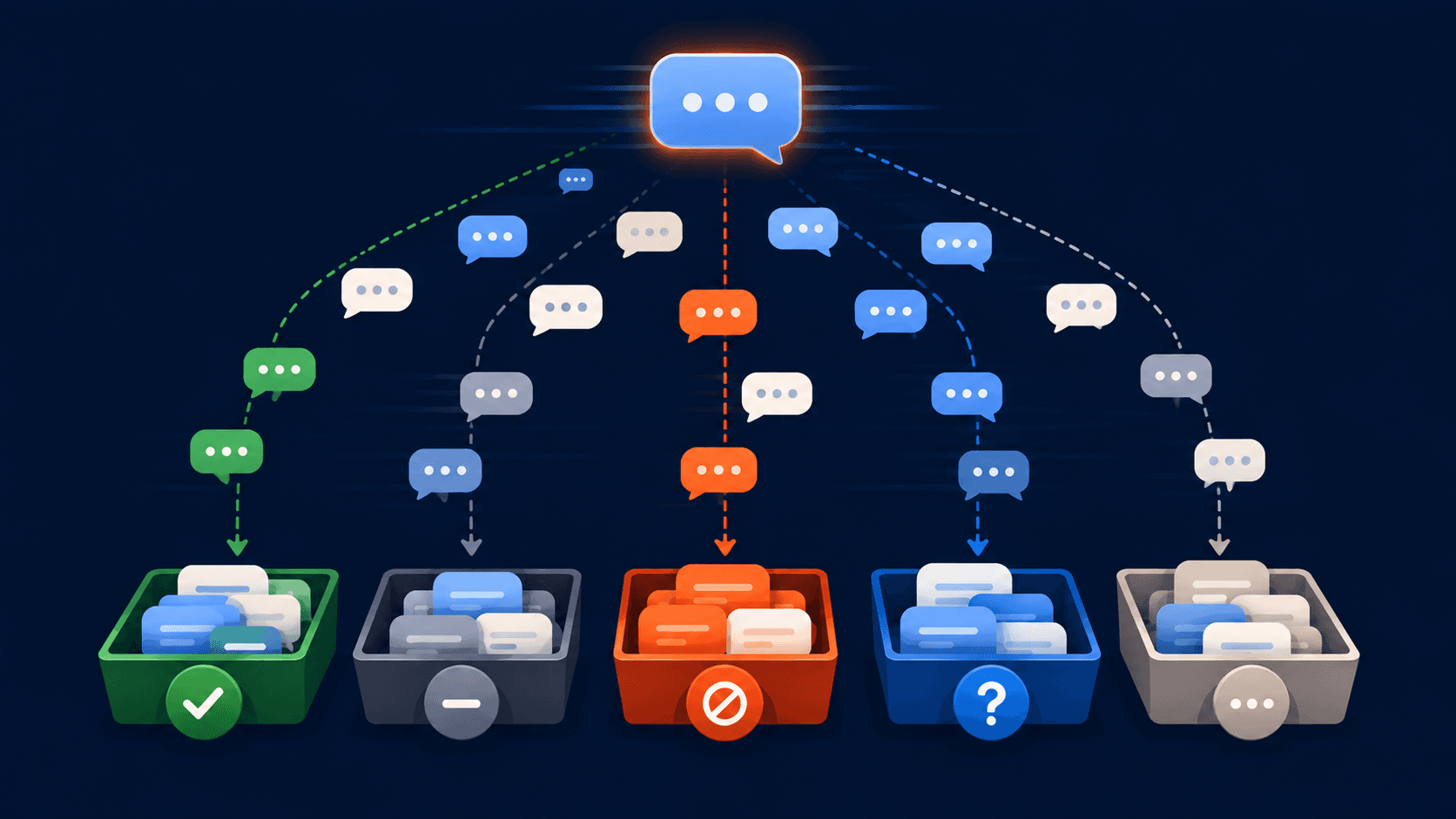
Manually sorting a day's replies into those buckets is exactly the kind of work that eats an admin's afternoon and still misses the two hot leads that arrived at lunch. In the pipeline I built, each inbound reply fires a webhook, gets parsed and categorized, and lands in the right place with no human touching it - the interested ones surface, the STOPs suppress, the noise disappears.
Route by dealership, not into one pile
For lead providers and multi-store groups, the second sorting problem is ownership: which dealership does this reply belong to? A reply that sits in a shared inbox belongs to nobody. Matching each lead to its store - and dropping the unmatched into a review queue instead of guessing - is what lets one person oversee thousands of replies. The same logic is covered from the CRM side in lead routing rules for dealerships.
Speed is the metric that pays
Measure time-to-first-human-response on interested replies. Everything else - delivery rates, volume, open estimates - is secondary. A buyer who texts "Y" is raising a hand right now; a same-hour response starts a conversation, a next-day response joins a pile of other dealers. The system exists to protect that window.
If your team reads SMS replies one by one, the fix is a sorting system, not more staff. Describe your current flow in one message and I will tell you honestly whether it is automatable.
FAQ
No. The Eleventh Circuit vacated the FCC's one-to-one consent rule on January 24, 2025 (Insurance Marketing Coalition v. FCC), days before its effective date. Prior express written consent under 47 CFR 64.1200 is still required for marketing texts, and STOP requests must still be honored immediately.
Same hour for interested replies. DAS Technology's NADA 2025 study found 61% of dealers now respond to new inquiries within 15 minutes - a buyer who texts back is warmer than a new inquiry, so slower treatment makes no sense.
Yes - reply triage (interested / not interested / stop / info request / other) is pattern work a webhook pipeline handles reliably. I run this in production: replies are parsed, categorized, and routed per dealership with unmatched ones dropping to a human review queue.
Yes. Marketing texts require prior express written consent under the TCPA implementing rules (47 CFR 64.1200), and opt-outs must be honored permanently. Consent discipline also protects your number's deliverability - carriers filter senders that ignore STOPs.
Sources
- Eleventh Circuit decision - Insurance Marketing Coalition v. FCC (Wiley Law alert) - January 24, 2025 ruling vacating the FCC's one-to-one TCPA consent rule days before its effective date.
- 47 CFR 64.1200 (TCPA implementing rules, eCFR) - The current federal rules on telemarketing calls and texts, including prior express written consent requirements.
- DAS Technology Automotive Lead Response Study (NADA 2025) - Unveiled January 2025 at NADA in New Orleans. Mystery-shop study of 1,700 lead inquiries via dealership vehicle detail pages, Q3-Q4 2024.