When a Google Sheet Beats a CRM for a Small Dealership
The best CRM is the one your team actually opens. For a lot of small dealerships, that is a well-structured sheet with automated input - not a platform nobody logs into.

There is a dirty secret in dealership operations: a lot of CRM subscriptions are login graveyards. The tool was bought to fix follow-up, onboarding never stuck, and the team quietly went back to sticky notes while the invoice kept arriving. Meanwhile the humble spreadsheet gets dismissed as unserious - even though a well-structured sheet that the team actually uses beats an enterprise CRM they do not.
I am not guessing. A production lead pipeline I built for an automotive lead provider - documented on the builds page - lands categorized SMS leads into a Google Sheet, one tab per dealership, automatically. It handled thousands of rows across dozens of dealership tabs, and the client's team worked from one always-current document.
The industry data explains why automated input is the dividing line: Foureyes' 2025 benchmarks found 14.1% of dealership website leads never get logged to a CRM at all - a pure capture failure. A sheet fed by webhooks cannot forget to log a lead; a human copying from an inbox can, and measurably does.
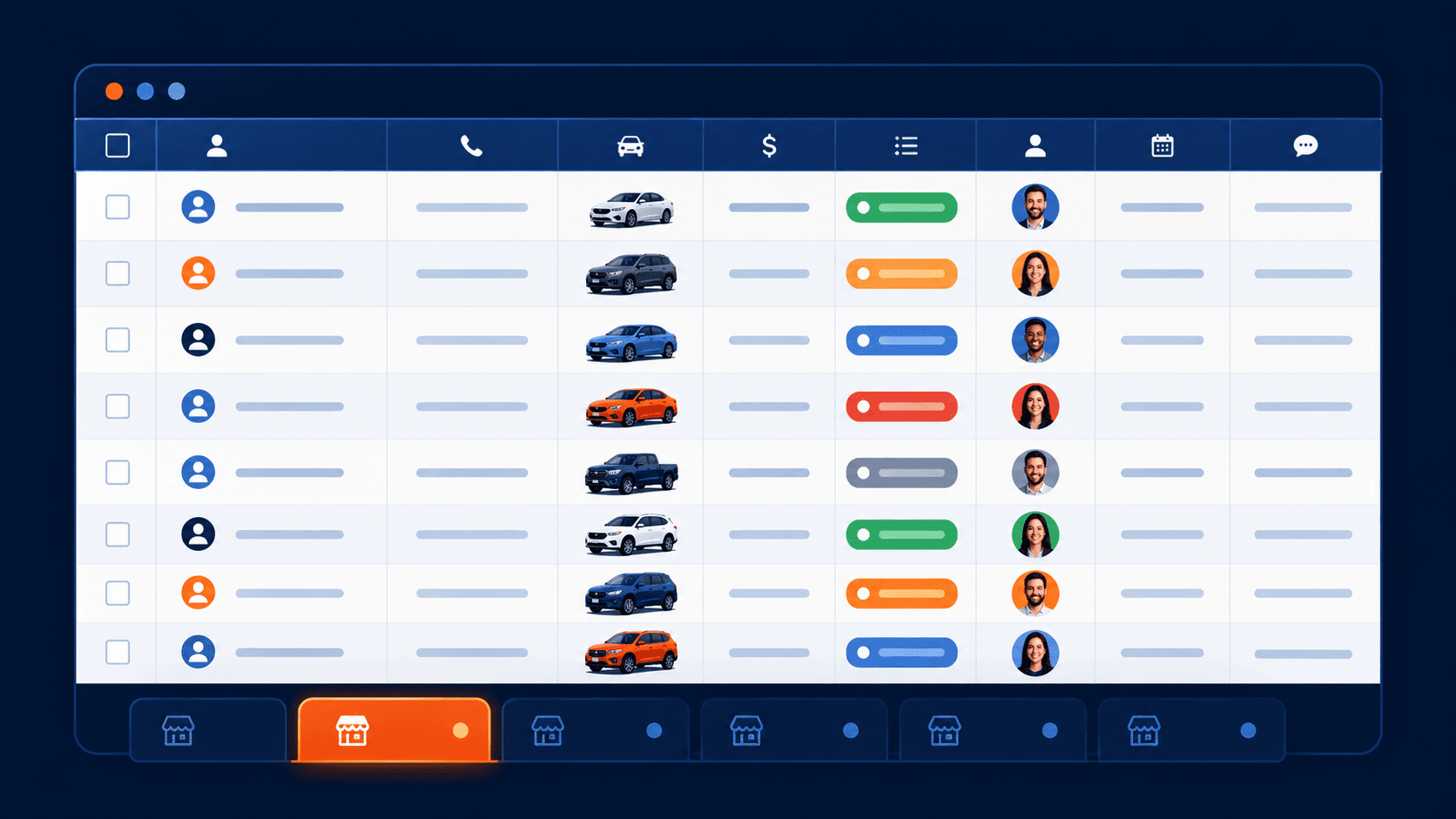
What the sheet must have to count as a system
- One row per lead with a timestamp - when it arrived is the follow-up clock.
- Source and intent columns: where it came from, what the buyer wanted.
- Status column with a fixed vocabulary: new, contacted, waiting, appointment, sold, lost.
- Owner column: a lead without a name on it belongs to nobody.
- Per-store tabs if you serve multiple locations - mixing stores in one tab recreates the shared-inbox problem.
- A category or flag for opt-outs, so suppression is enforceable.
The upgrade that changes everything: automated input
The failure mode of spreadsheet systems is manual entry - someone has to copy each lead in, so increasingly nobody does. The fix is wiring the sources directly: form submissions, webhook feeds, and SMS replies appended by automation instead of by hand. Once input is automatic, the sheet stops being a chore and becomes a live dashboard. That single change is what separated the build above from every abandoned tracker before it.
Honest limits: when you have outgrown it
Sheets strain when you need per-user permissions, real reminder automation, call logging, or pipeline reporting across dozens of users. If leads are being missed because the sheet is too big to scan - not because nobody opens it - you have earned a real CRM, and you will migrate well because your data is already structured: statuses, owners, sources, timestamps all map straight across.
The sequence that works is boring and reliable: capture cleanly first - covered in the lead capture flow post - organize in a structured sheet with automated input, and graduate to a CRM when the sheet's limits actually bite, not when a vendor's demo does.
Paying for a CRM nobody opens? A structured sheet with automated input might serve you better this quarter. Describe your lead flow via the contact page and I will tell you which side of the line you are on.
FAQ
For lead tracking at small scale, yes - if it has automated input, per-store tabs, statuses, owners, and timestamps. The tool the team actually opens beats the platform nobody logs into. I have run this structure in production across dozens of dealership tabs.
Manual entry. Foureyes' 2025 benchmarks measured 14.1% of website leads never reaching a CRM - when logging depends on a human copying from an inbox, some share always gets skipped. Automated capture via webhooks closes that gap structurally.
Timestamp, source, intent, contact details, status (fixed vocabulary: new, contacted, waiting, appointment, sold, lost), owner, and an opt-out flag - with one tab per store if you serve multiple locations.
When you need per-user permissions, automated reminders, call logging, or reporting across dozens of users - or when leads get missed because the sheet is too big to scan rather than because nobody opens it. Structured data migrates cleanly to a real CRM.
Sources
- Foureyes 2025 Automotive Dealer Industry Benchmarks Report - Released March 2025. Analysis of 1.1 billion dealer website visits across 22,500 dealership websites, calendar year 2024.